

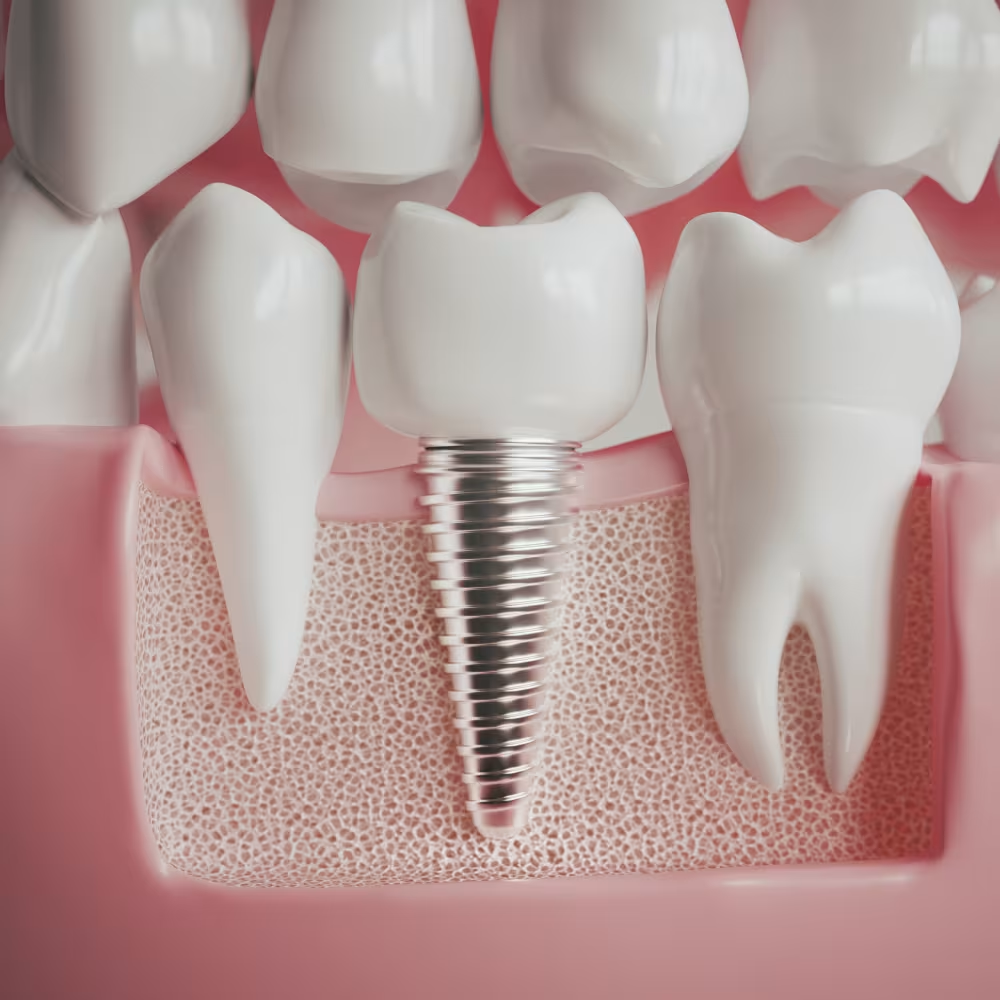
Occlusal Considerations for Implant-Supported Prostheses
COURSE NUMBER: 699
Swati Ahuja, BDS, MDS
Credit Hours:
1.5 Hour(s)
A well-designed occlusion for an implant-supported prosthesis minimizes stresses on implants, preserves marginal bone and soft tissues, and prevents implant and prosthetic failure. Unlike natural teeth, implants lack a periodontal ligament,...
(Use this feature to create assignments for your students and staff.)
Overview
A well-designed occlusion for an implant-supported prosthesis minimizes stresses on implants, preserves marginal bone and soft tissues, and prevents implant and prosthetic failure. Unlike natural teeth, implants lack a periodontal ligament, requiring specific occlusal modifications to ensure long-term success. Occlusion is fundamental to prosthodontic rehabilitation, influencing not only the oral structures but also the overall health. Occlusal disharmonies can impact the temporomandibular joints, muscles of mastication, and even systemic health.
Intended Audience:
Dentists, Dental Hygienists, Dental Students, Dental Hygiene Students, Dental Assistants, Dental Assisting Students, Dental Therapists, Dental Educators, Office Managers
Date Course Online:
Jan 16, 2026
Last Revision Date:
NA
Course Expiration Date:
Jan 15, 2029
Cost:
Free
Method:
Self-instructional
AGD Subject Code(s):
180, 690
Technical Requirements:
Stable internet connection and the latest version of browser and device software are recommended.
Learning Objectives
Upon the completion of this course, the dental professional should be able to:
- Learn the biophysiological differences between natural teeth and dental implants, and how these differences influence occlusion and load distribution.
- Define and critically evaluate occlusal overload, emphasizing its clinical significance in implant restorations.
- Identify and assess risk factors that predispose implant-supported prostheses to occlusal overload.
- Apply preventive and management strategies to eliminate occlusal overload.
- Describe appropriate occlusal principles for single implants, implant-supported bridges, and full-arch prostheses.
- Develop occlusal schemes that promote implant longevity, stability, and function.
- Integrate occlusion-driven planning into the surgical placement and prosthetic restoration of dental implants.
Disclaimers
- P&G is providing these resource materials to dental professionals. We do not own this content nor are we responsible for any material herein.
- Participants must always be aware of the hazards of using limited knowledge in integrating new techniques or procedures into their practice. Only sound evidence-based dentistry should be used in patient therapy.
Note: Registration is required to take test.
Submission Information
Academy of General Dentistry (AGD) Submission For credit transfers to appear in your AGD account in real time, make sure to add your AGD membership number in the field provided on the “Share Your Test Score” page.
CE Broker For all states that use CE Broker for licensure, “proof of completions” are electronically reported the first of every month. If a course was taken in November, the “proof of completion” will be submitted the beginning of December.
Recognition
Approved PACE Program Provider
THE PROCTER & GAMBLE COMPANY
Nationally Approved PACE Program Provider for FAGD/MAGD credit.
Approval does not imply acceptance by any regulatory authority or AGD endorsement.
8/1/2021 to 7/31/2027
Provider ID# 211886

AADH Approved Program Provider
Procter and Gamble is designated as an approved provider by the American Academy of Dental Hygiene, Inc. #AADHPGC (January 1, 2026 - December 31, 2027). Approval does not imply acceptance by a state or provincial Board of Dentistry. Licensee should maintain this document in the event of an audit.
(Use this feature to create assignments for your students and staff.)