

Radiographic Selection Criteria
Course Number: 584
Course Contents
Occupational and Operator Use of Ionizing Radiation
Operator Training Requirements and Radiation Safety Practice
Radiographic imaging examinations are typically delegated to qualified (as mandated by state law) auxiliary personnel, dental assistants and dental hygienists. During imaging procedures, dental personnel should stand behind a protective barrier that permits observation of the patient during exposure. If a barrier is not present, the clinician should stand at a 6 feet/2 meters distance from the x-ray source and at a position greater than a right angle (90-135° angle) to the primary beam. If a handheld x-ray unit is used for intraoral imaging, the device must be used according to the manufacturer’s guidelines.
Dental staff members who may be exposed to an annual effective dose greater than 1 mSv or as otherwise determined by local or state guidance, should consider wearing dosimeters (Figure 1) to track their quarterly and annual occupational exposure.2,24
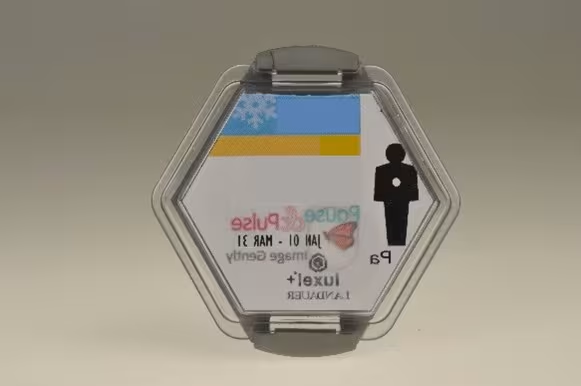
Figure 1. Personal Dosimeter
Pregnant dental personnel operating x-ray equipment must comply with recommendations outlined in the established radiation safety program, including limiting occupational exposure, use of protective radiation barriers, and personal dosimetry regardless of anticipated occupational exposure.2,24
Table 3. Occupational Whole-Body Dose Limits.24
| Occupational Whole-Body Dose Limits | ||
|---|---|---|
| Type | International Units | Traditional Units |
| Annual | 50 mSv | 5 rem |
| Embryo-fetus (term) | 5 mSv | 0.5 rem |